
Our Utilities & Infrastructure Engineering Process
- Utility infrastructure engineering begins with a detailed review of available system capacity. We evaluate municipal utility data, confirm connection feasibility, and perform utility capacity analysis to determine whether upgrades or extensions are required. Utility route planning and utility easement planning are addressed early to avoid later relocation conflicts. This proactive coordination supports smoother public utilities engineering approvals.
- Water and sewer utility design includes domestic service connections, fire loop configuration, hydrant placement, and meter sizing coordinated with fire protection standards and municipal criteria. Our sanitary sewer design approach optimizes gravity flow wherever possible. When elevation constraints require it, lift station design and force main coordination are incorporated to ensure reliable conveyance and long-term maintainability.
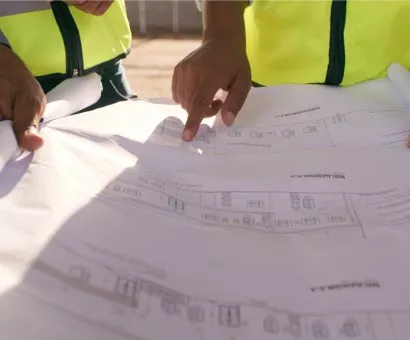
- Storm sewer utility design must integrate seamlessly with grading and stormwater management systems. We coordinate wet utilities engineering elements including pipe sizing, inlet spacing, and structure detailing to support both hydraulic performance and constructability. Utility plan and profile drawings clearly illustrate vertical and horizontal relationships to minimize field conflicts.
- Dry utility design includes strategic alignment of power, gas, and telecommunications systems. Through franchise utility coordination and utility conflict analysis, we prevent unnecessary crossings and future maintenance disruptions. Coordinating dry utilities engineering alongside wet systems reduces redesign risk and supports efficient underground utility construction.
- Underground utility engineering relies on accurate mapping and modeling. We utilize utility mapping and modeling techniques to evaluate spatial relationships and confirm clearances. Utility GIS data design and development services, along with as-built utility documentation coordination, help maintain long-term infrastructure accuracy.
- Clear construction documents are essential for successful underground utility installation. We prepare detailed site utilities design packages including utility plan and profile drawings, relocation design details where required, and coordinated specifications. During construction, we remain available to address field questions and support compliance with municipal and franchise utility standards.
What’s Included in Professional Utility Design Services
Professional utility design services extend beyond pipe layout. Our scope may include:
- Utility engineering and consulting
- Underground utility engineering and coordination
- Municipal utility design and review support
- Subdivision utility design for residential developments
- Utility infrastructure design and engineering for commercial and industrial sites
- Site utility engineering integrated with grading and drainage
- Utility coordination services with public and private providers
- Utility installation services planning (design-focused scope)
- Trenching and utility installation planning within engineered drawings
- Utility plan and profile drawings for permitting and construction
This systems-based approach ensures underground utilities function cohesively and remain maintainable long after construction is complete.
What Impacts Utility & Infrastructure Cost & Timeline?
Utility and infrastructure costs are influenced by both technical and regulatory variables. Key considerations include:
- Existing utility capacity constraints and required upgrades
- Depth and cover requirements driven by grading and frost conditions
- Utility relocation design for conflicts with existing infrastructure
- Utility easement acquisition and route approvals
- Franchise utility coordination timelines
- Municipal review cycles and public utilities engineering requirements
By evaluating these factors early, we provide realistic utility cost expectations and help establish achievable construction schedules.
Commercial, Residential & Industrial Utility Expertise
Austin Engineering provides utility infrastructure design across diverse project types.
Commercial & Mixed-Use Development
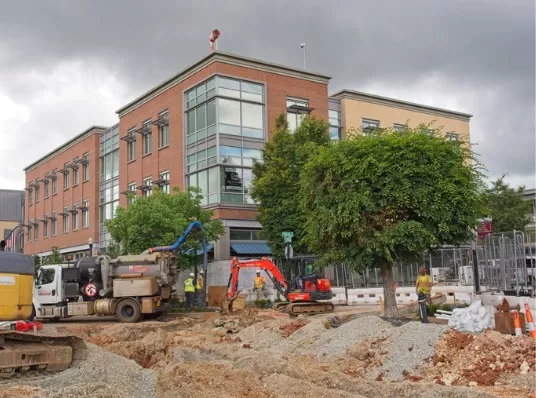
Commercial projects require tightly coordinated underground utilities to support building services, fire protection systems, and pedestrian-oriented environments. We integrate wet and dry utilities engineering within compact sites while maintaining code compliance and constructability.
Residential & Subdivision Infrastructure
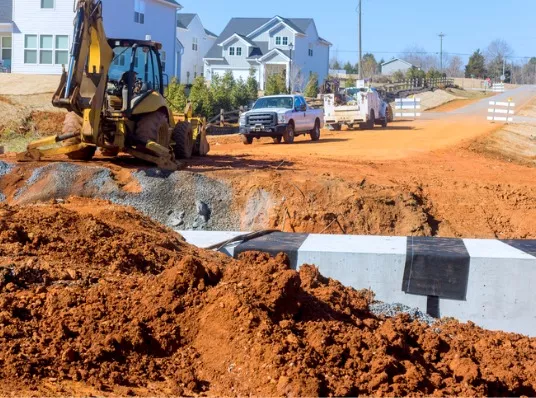
Subdivision utility design includes water and sewer main extensions, service lateral planning, and long-term serviceability considerations. Our water and sewer utility design approach supports consistent performance across multiple lots and phased development.
Industrial & Public Infrastructure Projects
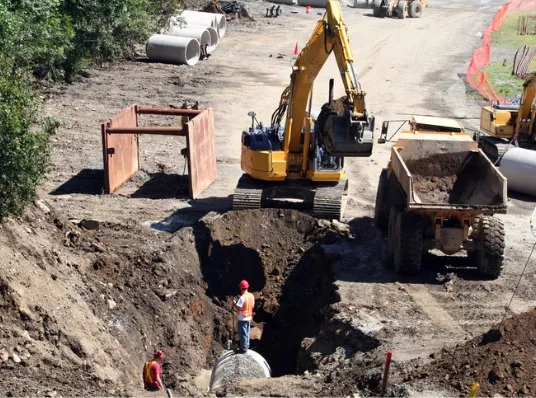
Industrial and public infrastructure projects often involve larger-diameter utility infrastructure design, capacity-driven system sizing, and coordination with municipal standards. We manage utility relocation coordination and public/private utility interface requirements to support operational continuity.
Utilities & Infrastructure Engineering Across Peoria, Davenport & Chattanooga
Our utilities & infrastructure engineering services are supported by offices positioned to serve Illinois, Iowa, and Tennessee with consistent standards and local familiarity.
-
Peoria, Illinois - Corporate Headquarters
311 SW Water Street, Suite 215
Peoria, IL 61602From our Peoria headquarters, we coordinate municipal utility design and public utilities engineering requirements throughout Central Illinois.
Utilities & Infrastructure in Peoria, IL -
Davenport, Iowa - Branch Office
220 Emerson Place, Suite 101-A
Davenport, IA 52801In Eastern Iowa, our underground utility engineering approach accounts for regional infrastructure standards and river-adjacent considerations.
Utilities & Infrastructure in Davenport, IA -
Chattanooga, Tennessee - Branch Office
2115 Stein Drive, Suite 201
Chattanooga, TN 37421Chattanooga projects often require coordinated wet and dry utilities design adapted to varied terrain and municipal expectations.
Utilities & Infrastructure in Chattanooga, TN
Why Austin Engineering for Utilities & Infrastructure?
-

Capacity-Driven System Design
We verify system capacity before finalizing utility infrastructure design, reducing the risk of costly redesigns and delayed approvals.
-

Integrated Wet & Dry Utility Coordination
By aligning wet utilities engineering and dry utility design early, we minimize conflicts and improve underground utility construction efficiency.
-

Longevity & Multi-State Expertise
Having operated for over eight decades, our team is familiar with multi-state municipal requirements, enabling consistent utility engineering delivery across Illinois, Iowa, Tennessee, and additional neighboring states.
-

Public & Private Project Experience
We support both municipal and private clients, coordinating public utilities engineering standards with commercial and residential development goals.
See What Our Clients Are Saying
“Austin Engineering has the expertise to handle anything and everything civil in my experience. Their services are reliable, timely and fairly priced. I would recommend Austin Engineering do your project any day of the week!”
“Austin Engineering is an excellent firm. Our company and related entities have been using Austin as our engineering firm of choice for many years. They have always been professional and trustworthy. If you need a job in a hurry, they are always able to help.”
Frequently Asked Questions About Utilities & Infrastructure
Utility engineering services include capacity analysis, water and sewer utility design, storm sewer utility design, dry utility coordination, and preparation of utility plan and profile drawings for permitting and construction.
Utility capacity is evaluated through municipal data review, flow projections, and utility capacity analysis to confirm that proposed systems can support anticipated demand.
Utility relocation design may be required when new development conflicts with existing underground utilities or when infrastructure upgrades are mandated by municipal standards.
Wet utilities engineering typically includes water, sanitary sewer, and storm systems. Dry utilities engineering involves power, gas, telecommunications, and franchise utility coordination.
Approval timelines vary by jurisdiction and project complexity, but early coordination and complete documentation significantly reduce review cycles.
How Utilities & Infrastructure Fit Into Your Civil Engineering Plan
Utilities & infrastructure engineering is one component of our broader Civil Engineering services and functions best when integrated with site planning, grading, and stormwater management from the outset.
- Site Development: Establish overall layout and utility corridor planning aligned with land use and access requirements.
- Stormwater & Drainage: Coordinate storm sewer utility design with detention and runoff management systems.
- Grading & Earthwork: Align finished grade elevations with underground utility engineering to prevent conflicts.
- Construction Documents & Support: Deliver coordinated utility documentation and provide construction-phase support.
For additional project support, Austin Engineering also provides Land Surveying and Landscape Architecture services.
Ready to Move Your Site Forward?
Reliable utility infrastructure begins with coordinated engineering.
Contact our Corporate Headquarters at 311 SW Water Street, Suite 215, Peoria, IL 61602 by calling (309) 315-3643 to discuss your utilities & infrastructure engineering needs.