
Buildable, Sustainable Landscape Architecture
Landscape Architecture Services – Functional Spaces. Sustainable Choices. Designs that Perform.
Great sites are the result of clear intent and practical detailing. Austin Engineering delivers landscape architecture that respects budgets, maintenance realities, and long-term community goals. Our landscape architects work in lockstep with our civil engineers and surveyors to design outdoor environments that are buildable on day one and durable for decades—paths that function, plantings that thrive, and spaces that enhance value without creating operational liabilities.
Why Clients Choose Our Landscape Team
-

User Experience by Design
We prioritize wayfinding, comfort, and safety. By analyzing pedestrian desire lines, ADA grade requirements, and sightlines, we create intuitive, welcoming environments that manage flow effectively.
-

Green Infrastructure with ROI
Permeable pavements, bioswales, and rain gardens are engineered assets, not just "green" additives. When executed correctly, they reduce peak stormwater flows, improve water quality, and lower long-term infrastructure costs.
-

Integrated Civil Coordination
Our landscape architects collaborate daily with our civil engineers. This ensures grades, drainage, utilities, and root zones work in concert—preventing conflicts, reducing change orders, and eliminating callbacks.
-

Technical Rigor
Our team is deeply engaged with AWWA, ISPE, NSPE, ISPLS, and ISPLA. This cross-disciplinary perspective ensures our planting and hardscape systems integrate seamlessly with utilities and maintenance best practices.
Designing Spaces People Truly Use
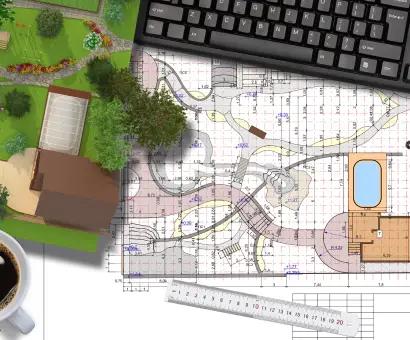
Every successful site begins with a clear diagram—a plan that translates intent into constructible reality. We transform complex constraints into legible, efficient layouts that balance building massing, service access, parking requirements, and pedestrian circulation. From native-focused planting strategies and stormwater-integrated green infrastructure to functional plazas, courtyards, and trail connections, our team engineers landscapes that are resilient and sustainable. We rigorously coordinate lighting, site amenities, and construction documentation to ensure the space performs as reliably on day one as it does a decade later.
What We Do
From Concept to Constructability. We develop simple, effective plans that balance operational needs with usable outdoor space.
-
Programming
We document uses, adjacencies, and capacity targets early to prevent rework.
-
Circulation
Pedestrian routes, drop-offs, and service access are mapped for safety and efficiency, integrating ADA compliance naturally into the site grading.
-
Microclimate Strategy
Shade, wind, and glare matter. Strategic tree placement and material selection improve thermal comfort and extend the usable season.
-
Material Selection
We balance durability, aesthetics, and lifecycle costs—specifying concrete, unit pavers, or stabilized aggregates only where they make economic and functional sense.
Strategy, Not Just Aesthetics. Our planting plans are engineered for ecology, hydrology, and maintenance reality.
-
Right Plant, Right Place
Species are selected based on soil conditions, hydrology, and exposure. We account for mature root structures to avoid conflicts with infrastructure.
-
Seasonal Continuity
Designs provide structure in winter and color from spring to fall, ensuring year-round visual interest.
-
Resource Management
We specify soil amendments and compost as rigorously as the plants themselves. Irrigation is designed only where it adds value, utilizing smart controllers to minimize waste.
-
Maintenance Clarity
Every plan includes clear guidance on mowing limits, pruning standards, and replacement protocols.
Safe, Legible, Resilient Edges. We design public interfaces that are durable and easy to maintain.
-
Pedestrian Zones
Clear walkways and furnishing zones that avoid conflicts with utilities and street trees.
-
Intersections
Curb extensions and crosswalks designed for maximum visibility and safety without compromising drainage.
-
Lighting Coordination
Pole and bollard placement is coordinated with trees to ensure even illumination and compliance with dark-sky goals.
Outdoor Rooms for Daily Use. We create amenities that support daily activity without requiring event-level maintenance budgets.
-
Seating Strategy
We integrate fixed and flexible seating for various group sizes, utilizing edge restraints and planter walls to maximize capacity without clutter.
-
Shade & Shelter
We position seating away from glare and prevailing winds, utilizing strategic tree canopy placement and overhead structures to create protected microclimates.
-
Utility Integration
Power and water access points are planned upfront to support maintenance and events.
Linking Sites to the Community. We design connections that integrate seamlessly with regional networks.
-
Trail Alignment
We engineer natural path alignments that meet ADA standards while strictly coordinating with drainage patterns and existing utilities.
-
Bicycle Support
We integrate clearly placed bicycle parking and repair stations where appropriate, establishing routes that minimize conflict with vehicular traffic.
-
Wayfinding
We develop signage strategies and clear sightlines that allow visitors to intuitively navigate from parking areas to entrances and across campuses without ambiguity.
Stormwater Management as an Amenity. Landscape and stormwater systems should reinforce one another.
-
Permeable Pavements
We design permeable systems with appropriate base depths and underdrains to ensure longevity, detailing them to exclude fines and maintain infiltration rates.
-
Bioretention
Our systems utilize engineered soil media and pretreatment structures to manage inundation effectively while supporting sustained plant health and pollutant removal.
-
Tree Trenches
In constrained streetscapes, we employ connected soil volumes to support urban tree vigor while increasing stormwater storage capacity beneath the hardscape.
-
Maintenance Planning
We ensure lasting performance by specifying clear maintenance protocols—such as sediment removal and mulch cycles—to keep systems effective post-construction.
Quality Control Before Bidding. Clear drawings reduce questions and ensure the built result matches the design intent.
-
Plan Sets
We produce rigorous construction drawings checked against civil and architectural sets to align joints, edge restraints, and utility structures.
-
Mockups & Submittals
We specify field mockups for critical paving and masonry elements to confirm material quality and craftsmanship standards prior to full installation.
-
Phasing
We carefully sequence landscape installation with earthwork and pavement schedules to protect subgrades, minimize compaction, and ensure new work is not compromised by subsequent construction traffic.
- need text
- need text
- need text
- need text
Featured Project
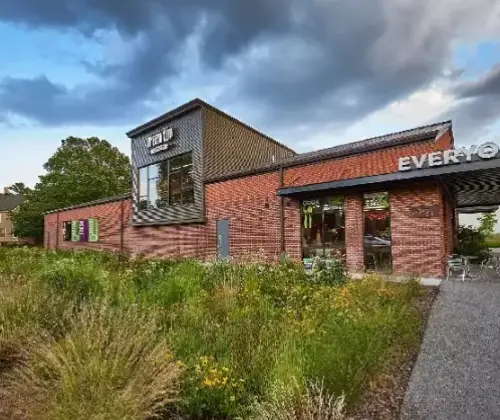
The Foundry Shopping Center, Bloomington, IL
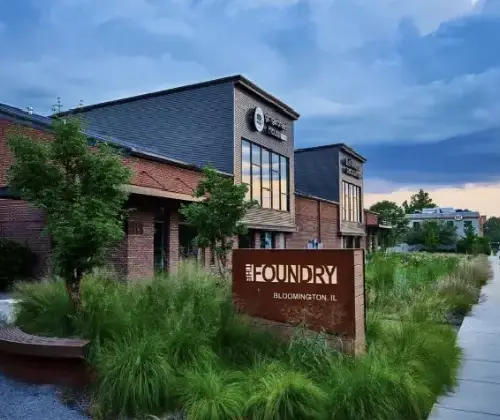
A former industrial foundry was transformed into a community-oriented retail destination. By collaborating with our civil team, we integrated permeable paving, native plantings, and pedestrian connections to the Constitution Trail.
The Result: Improved water quality, reduced heat island effect, and a highly walkable environment that anchors the site to the community.
Industries We Serve in Peoria
Peoria’s diverse landscape—ranging from historic neighborhoods and industrial corridors to expanding commercial districts—presents distinct engineering challenges. Our team possesses deep expertise in local permitting processes, drainage mandates, and design standards, allowing us to deliver solutions specifically engineered for this region’s unique context.
- Commercial & Mixed-Use Plazas, patios, and shared streets that enhance Peoria’s urban core, boost foot traffic, and extend dwell time for downtown shops and riverfront destinations.
- Municipal & Public Streetscapes, parks, and trail connections designed to be safe, durable, and easy for municipal crews to maintain.
- Healthcare & Education Healing gardens, courtyards, and ADA-compliant paths that improve campus navigation and comfort for Peoria’s hospitals, clinics, and educational facilities.
- Industrial & Logistics Screening and amenity spaces that support operations without obstructing flow — from heavy truck circulation to employee amenity spaces.
- Residential Entry features, pocket parks, and stormwater landscapes that respect neighborhood character while meeting Peoria’s subdivision and drainage standards.
Our Process
- We align on stakeholder goals, maintenance capabilities, and budget targets immediately. This prevents rework and ensures the design is sustainable for the long term.
- We test 2–3 options for circulation and material strategy. This provides quick cost feedback to guide decision-making before detailed design begins.
- We refine grading and materials while coordinating with utilities. Catching conflicts now avoids costly field changes later.
- Comprehensive plans and specifications are produced. This includes clear quantities and bid alternates to protect the budget.
- We manage submittals and address reviewer comments quickly Our goal is to keep your project moving and avoid approval bottlenecks.
- We remain involved to answer RFIs and observe installation. Quality is ensured while design intent is preserved.
- We provide all necessary maintenance guidance. Our goal is to ensure the landscape establishes and matures as planned and your investment is protected for the long term.
Ready to Shape Your Site?
If you are planning a streetscape, campus, or commercial site, Austin Engineering creates landscapes that are resilient, comfortable, and straightforward to maintain. Share your goals, schedule, and constraints—we’ll outline a clear plan, a realistic budget range, and drawings that contractors can build without guesswork.
Start your project conversation with our landscape architecture team today.
The Questions We Hear The Most
Yes. When designed correctly, permeable systems and bioretention can reduce peak flows, potentially offsetting the cost of traditional gray infrastructure while adding aesthetic value.
We coordinate grades early with our civil team. Target slopes are established during concept design and verified with precise spot elevations in the construction documents.
Yes. We plan for temporary edges and tree protection to ensure early phases don't damage future work areas.
We offer site walks after the first season to identify warranty replacements and adjust maintenance or irrigation schedules.
Expert Insight: Navigating Illinois Landscape Ordinances
In Illinois, municipal landscaping requirements frequently reference the Illinois Landscape Contractors Association (ILCA) guidelines and specific zoning mandates. Typical codes dictate a prescribed mix of canopy trees, understory trees, shrubs, and groundcover per 100 linear feet of frontage, in addition to rigorous screening for service areas. Furthermore, many communities mandate or incentivize the use of native species in alignment with the Illinois Native Plant Act (525 ILCS 30) to support biodiversity and pollinator health. By proactively aligning planting plans with local ordinance tables and native species recommendations, we eliminate costly resubmittals and accelerate plan commission approvals.