
Civil Engineering Built for the Real World
BUILDABLE PLANS. PREDICTABLE TIMELINES. RESULTS YOU CAN RELY ON.
Every successful project begins with the ground beneath it. Unaddressed site constraints threaten schedules and inflate budgets. Austin Engineering brings clarity to complexity, transforming unknowns into precise, buildable plans that transition seamlessly from concept to construction.
Our engineers coordinate extensively with architects, developers, municipalities, and utility providers to mitigate risk, accelerate approvals, and deliver high-performance sites. From initial feasibility to the final punch list, we remain actively engaged to ensure your project remains on time and within budget.
YOUR PARTNER FROM CONCEPT TO CONSTRUCTION
-

Licensed & Scalable Reach
Operational in IL, IA, WI, IN, FL, NC, TX, TN, GA, KS, LA, MO, OH, SC, CO, and AL. Our multi-state licensure provides you with a single, cohesive partner capable of delivering consistent standards and unified processes across regional boundaries.
-

Transparent Communication & Accountability
We prioritize clarity. You will always understand our strategic approach, the rationale behind our engineering decisions, and the associated costs. We believe in "no surprises" project management.
-

Schedules that Hold
Deadlines are non-negotiable. We proactively account for agency review cycles, utility coordination intricacies, and contractor lead times to ensure your timeline remains intact.
-

Professional Leadership
Our team is deeply embedded in the industry through active participation in AWWA, ISPE, NSPE, ISPLS, and ISPLA. Continuous professional development ensures we apply current standards and proven best practices to every project we undertake.
Engaging us early streamlines the path through entitlements and construction—saving weeks of time and significant capital.
SOLVING SITE CHALLENGES BEFORE THEY IMPACT YOUR BOTTOM LINE
Selecting the right civil engineering team results in fewer redesigns, competitive bids, and minimal change orders.
We optimize the engineering process to maximize your project’s success.
What We Do
We transform site constraints into workable solutions that balance grading, utilities, access, parking, and open space. We model multiple concepts early, allowing owners to evaluate options and costs prior to commitment.
-
Due Diligence & Feasibility
Comprehensive zoning checks, utility availability analysis, access assessments, and high-level grading to inform land acquisition and entitlement strategies.
-
Concept & Entitlement Support
Production of clear, presentation-ready exhibits tailored to local requirements. We provide expert representation at plan commissions and public hearings.
-
Site Layout Optimization
Strategic placement of buildings, fire lanes, loading zones, and pedestrian routes to satisfy code while prioritizing safety and operational efficiency.
Stormwater management is both a compliance requirement and a long-term asset protection strategy. We design resilient systems that meet code and protect your site and neighbors during real-world weather events.
-
Detention & Retention
Precise basin sizing, outlet control structures, and emergency overflow routes designed against rigorous local rainfall data.
-
Permeable & Green Infrastructure
Practical implementation of permeable paving, bioswales, and rain gardens, ensuring soil suitability and maintainable long-term performance.
-
Infrastructure Design
Efficient pipe network design that avoids conflicts with architectural elements and existing utilities.
-
Outfall & Downstream Analysis
Verification of tie-in capacity and erosion mitigation to ensure long-term stability.
We engineer the site to move only the necessary earth. We optimize cut and fill, finish floor elevations, and slope transitions to ensure proper drainage and efficient construction.
-
Mass Grading Strategy
Balancing earthwork goals with haul and stockpile locations to reduce trucking costs and staging complexities.
-
Pavement & ADA Compliance
Designing walking surfaces, ramps, and parking stalls that meet accessibility standards without compromising site grading.
-
Slope Stability
Engineering slopes that resist erosion and allow for safe, sustainable maintenance.
Dependable infrastructure starts with precise planning. We design systems that integrate seamlessly with municipal connection points and capacity requirements.
-
Water Systems
Domestic service, fire loops, hydrant placement, and meter sizing coordinated with local standards and fire safety codes.
-
Sanitary Sewer
Gravity line optimization, lift station design where necessary, and coordination with receiving systems to ensure realistic cover and flow.
-
Storm Sewer
Constructible and maintainable pipe sizing, inlet spacing, and structure detailing.
-
Dry Utility Coordination
Strategic coordination of power, gas, and telecommunications to prevent crossing conflicts and future maintenance disruptions.
A clear, complete plan set ensures bidder alignment and minimizes change orders.
-
Plan Production
Comprehensive civil cover sheets, grading, drainage, and utility plans—thoroughly detailed for field crews.
-
Specifications & Quantities
Accurate bid form quantities and alternates to maintain competitive and transparent pricing.
-
Bidding & RFI Management
Active participation in pre-bid meetings, rapid RFI responses, and addenda issuance to maintain process integrity.
-
Construction Administration
Shop drawing reviews, periodic site observation, testing coordination, and punch list management at project closeout.
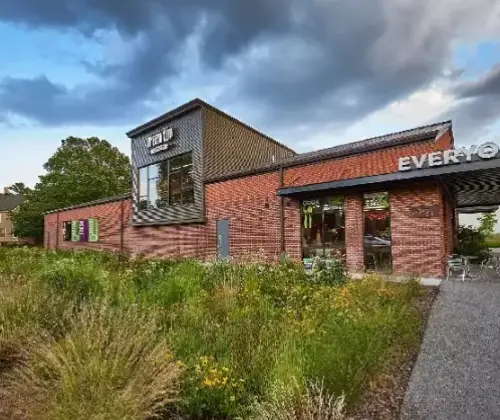
PROJECT SPOTLIGHT: THE FOUNDRY SHOPPING CENTER
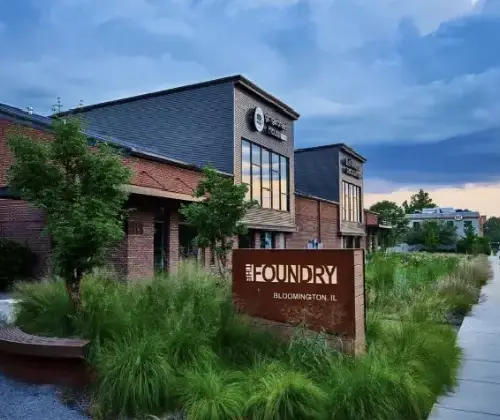
We revitalized a former foundry site into a vibrant retail destination through coordinated site planning, advanced stormwater design, and thoughtful landscape architecture. The result:
- Implementation of permeable paving and native plantings for responsible water management.
- Pedestrian integration with the Constitution Trail to drive foot traffic.
- A layout that blends seamlessly with the surrounding residential fabric.
This is the Austin Engineering Standard: Transforming challenging sites into thriving community assets.
REGIONAL OPERATIONS
We deliver projects across the Midwest and Southeast, combining deep knowledge of local codes with multi-state experience.

- Peoria, IL Civil Engineering & Landscape Architecture Specializing in urban infill, municipal coordination, and stormwater solutions for Central Illinois standards. Civil Engineering in Peoria, IL
- Davenport, IA Site Development & Stormwater Expertise in riverfront conditions, detention design, and resilient grading tuned to local review processes. Civil Engineering IN Davenport, IA
- Chattanooga, TN Grading, Utilities & Green Infrastructure Specialists in hillside grading, complex utility coordination, and GI strategies aligned with regional expectations. Civil Engineering IN Chattanooga, TN
Building elsewhere? Our multi-state licensure allows us to follow your growth. Contact us to discuss your next location.
WORKING WITH AUSTIN ENGINEERING
Every successful project requires a disciplined roadmap. Our process is designed to eliminate variables, align stakeholders, and advance your project from concept to construction without delay.
Our Proven Process
- We document project drivers, stakeholder needs, and budget targets. This foundational step ensures alignment, uncovers risks early, and sets a realistic roadmap.
- We provide 1–3 initial concepts with earthwork and utility implications. Seeing options side-by-side allows for informed trade-offs and confident budgeting before final commitment.
- We advance the preferred concept and initiate permit discussions. Conflicts are resolved on paper—not in the field—saving rework and protecting the schedule.
- We submit complete packages and resolve reviewer comments efficiently. By providing reviewers exactly what they need the first time, we reduce back-and-forth and accelerate approvals.
- We produce bid-ready plan sets with detailed specifications and quantities. Clear, buildable drawings reduce RFIs and minimize change orders that threaten budgets.
- We support the procurement process and address bidder inquiries. A transparent bid process yields competitive pricing and fewer disputes during construction.
- We remain engaged through submittals, RFIs, and the final punch list. Your plans are backed by the team that designed them, ensuring field questions are resolved quickly.
READY TO MOVE FORWARD?
Every great project starts with a conversation.
Whether you are evaluating a site, preparing for submittal, or resolving a complex stormwater challenge, Austin Engineering provides the expertise you need. Share your goals and schedule, and we will map a clear path to approval and construction.
QUESTIONS WE HEAR THE MOST
Immediately upon site selection. Early insight into grading, utility access, and stormwater requirements can save weeks of redesign and significantly strengthen your position during land negotiations.
Standard commercial projects typically require 6–10 weeks from concept to permit submittal, contingent on project complexity and agency workload.
You will receive a comprehensive plan set including grading, drainage, and utility details, accompanied by calculations, specifications, and cost estimates that strictly align with the drawings.
Yes. We rigorously align building elevations, route utilities to mechanical rooms, and coordinate fire protection and metering to ensure total system integration.
Yes. We prepare high-quality exhibits and attend hearings to present the plan, provide technical testimony, and address board or public inquiries.
That is our primary objective. Through thorough labeling, conflict checks, and rapid field responses, we minimize issues and keep construction moving efficiently.
EXPERT INSIGHT:
ILLINOIS STORMWATER & GRADING STANDARDS IN CIVIL DESIGN
In Illinois, local stormwater ordinances frequently mandate the use of Illinois State Water Survey Bulletin 70 (or Bulletin 75) rainfall data for hydrologic design. While NOAA’s Atlas 14 is gaining traction, many counties continue to reference Bulletin 70 in their codes.
For structural design, storm sewer installations must comply with IDOT Standard Specifications Section 550, which governs materials (clay, concrete, PVC), bedding, jointing, and alignment. A critical requirement is maintaining minimum horizontal and vertical separation between storm sewers, water mains, and service lines—typically 10 ft horizontal or 18 inches vertical—or utilizing “water-main quality” pipe in constrained conditions.
The Austin Engineering Approach: We apply these standards proactively, ensuring your stormwater systems and grading schemes withstand technical scrutiny from municipal and IDOT reviewers, avoiding costly review cycles.